
0
CART
0
YOUR CART

Pay cash discounted price and save
Here is the PC hardware you will need to run Windows 10 when this new operating system upgrade arrives in late July. This list includes basic system requirements plus additional hardware that is required for certain features.
To upgrade you will need ?the latest version either Windows 7 with Service Pack 1 (SP1) or Windows 8.1 with Update 2.
Processor: 1 GHz or faster processor or SoC (system on a chip). 64-bit versions of Windows 10 require a processor that supports CMPXCHG16b, PrefetchW, and LAHF/SAHF capabilities.
RAM: 1 GB for 32-bit or 2 GB for 64-bit
Hard disk space: 16 GB for 32-bit or 20 GB for 64-bit
Graphics: DirectX 9 or later with WDDM 1.0 driver. Some games and apps might require DirectX 10 or higher for optimal performance.
Display: 1024 x 600. The number of applications that can be snapped depends upon the minimum resolution for each application.
Touch: A tablet or a monitor that supports multi-touch. You can learn more here.
Internet access
Microsoft account: Required for some features.
Cortana support: Cortana is only supported in the United States, United Kingdom, China, France, Italy, Germany, and Spain. Speech recognition requires a microphone.
Windows Hello: A specialized illuminated infrared camera for facial recognition or iris detection, or a finger print reader which supports the Window Biometric Framework.
Continuum: A tablets or 2-in-1 PC with GPIO indicators. Others can enter and exit Tablet Mode manually.
Music and Video streaming: The Xbox Music and Xbox Video streaming capabilities are only available in certain regions.
Secure Boot: Firmware that supports UEFI v2.3.1 Errata B and has the Microsoft Windows Certification Authority in the UEFI signature database.
Device Guard: Only available in Windows 10 Enterprise. Requires UEFI Secure Boot with 3rd party UEFI CA removed from the UEFI database, TPM 2.0, virtualization support configured on by default in the System Firmware (BIOS), Intel VT-x or AMD RVI virtualization extensions, Intel EPT or AMD RVI Second Level Address Translation, Intel VT-d or AMD-Vi IOMMU, UEFI BIOS configured to prevent unauthorized user from disabling Device Guard hardware security features, and Microsoft signed and compatible kernel mode drivers.
Device encryption. A PC with InstantGo and TPM 2.0.
BitLocker: Windows 10 Pro or Enterprise, Trusted Platform Module (TPM) 1.2, TPM 2.0 or a USB flash drive.
BitLocker To Go: Windows 10 Pro or higher, a USB flash drive.
Client Hyper-V: Windows 10 Pro or Enterprise 64-bit, second level address translation (SLAT) capabilities and an additional 2 GB of RAM.
Miracast: A Windows Display Driver Model (WDDM) 1.3-compatible display adapter and a Wi-Fi adapter that supports Wi-Fi Direct.
Wi-Fi Direct Printing: A Wi-Fi adapter that supports Wi-Fi Direct and a device that supports Wi-Fi Direct Printing.
Get specific details about this product from customers who own it.
The prices and specifications on this page are collected from the respective brands and are updated regularly, but may change without prior notice; the price shown at checkout is final.
Product images are for illustration only and the actual product may differ slightly in colour or packaging.
All orders are confirmed by our team after checking stock availability.
Warranty service follows the warranty period stated for this product and the brand's policy; please keep your invoice for any warranty claim.
If you find any incorrect information on this page, please let us know through the Suggestion button — we will correct it promptly.
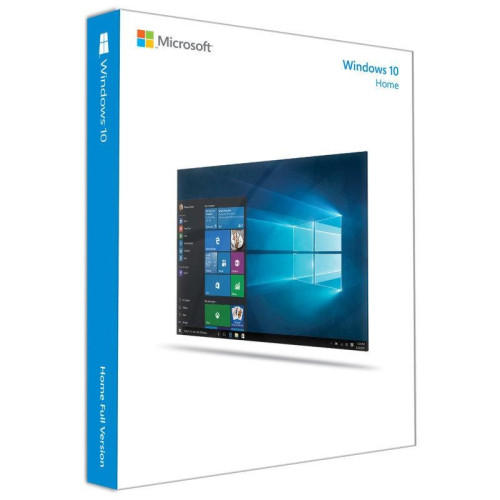
The Microsoft Windows 10 Home OEM 64-bit (KW9-00139) is expected soon at Computer Vision BD, and its price is yet to be announced, so please call 01937-969691 for availability. Follow us on Facebook and YouTube for updates, offers and product reviews.


